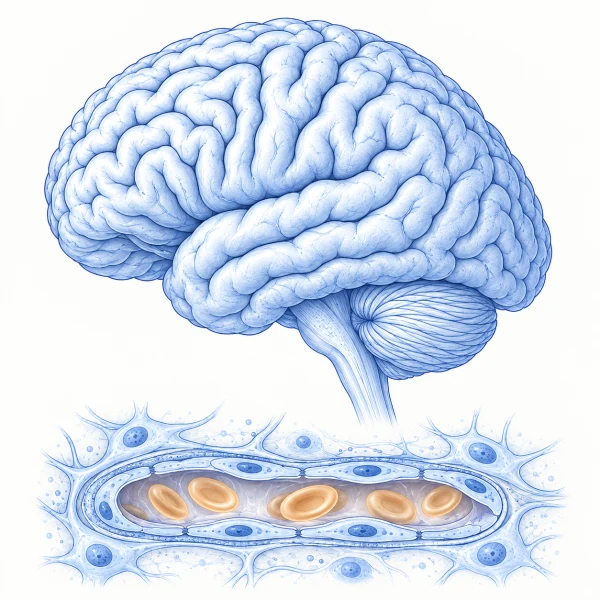
03The Circumventricular Sentinel Network
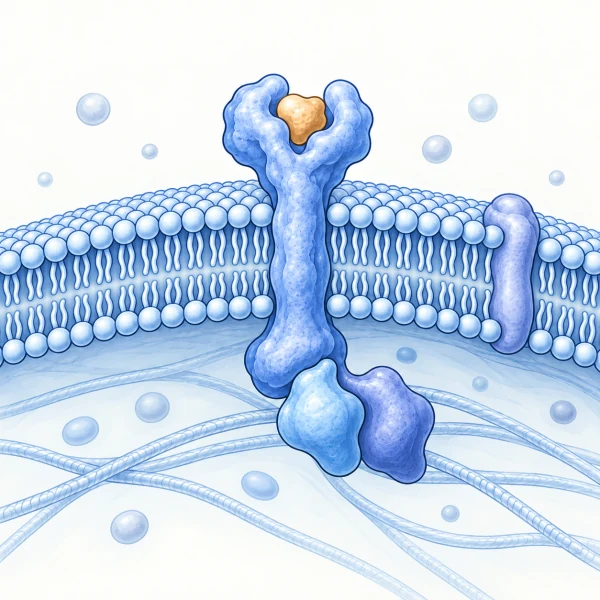
A test can detect a receptor without showing whether it works. The receptor and its immediate partners must receive the signal, pass it on and remain available for another response.
A receptor population can give a normal first response and a weak second one, because too little of it has returned to work before the next demand arrives.
Cirsentra identifies the conditions that make a target functional. This guides tests and treatments aimed at protecting or restoring the capacity a biological signal, or a drug, needs. Microbial enzymes, inflammation and drug exposures are among the sources of injury we investigate.
We call the resulting approach target-capacity pharmacology: preserve usable targets, rebuild them, bypass a lost route, or diversify away from a vulnerable one. Cystic fibrosis already shows the principle: one drug helps the faulty CFTR channel reach the cell surface, a second makes it work, and together they improved lung function in randomised trials.
It also makes restoring treatment responsiveness a goal in its own right. When a therapy needs machinery a patient has lost, an enabling treatment can restore that prerequisite before the therapy is given.
Explains whether a signal can initiate a response, and whether the receiver remains available for another.
In the manifesto: A treatment needs a receiver that works
Discuss a partnership