04Systemic Metabolic Readability
The Circumventricular Sentinel Network
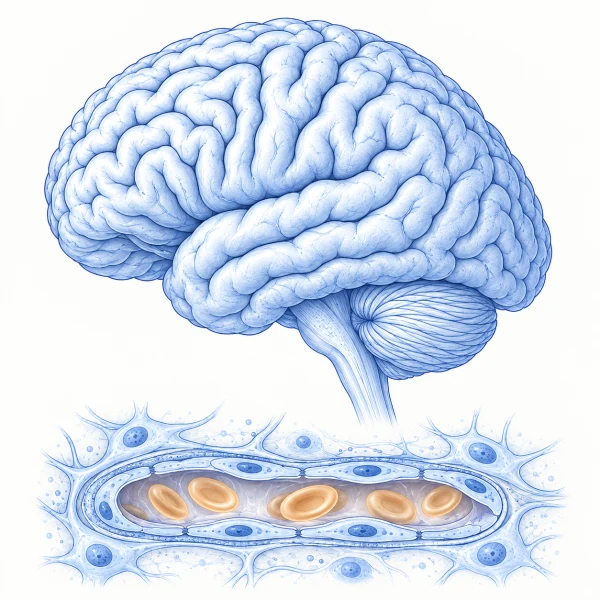
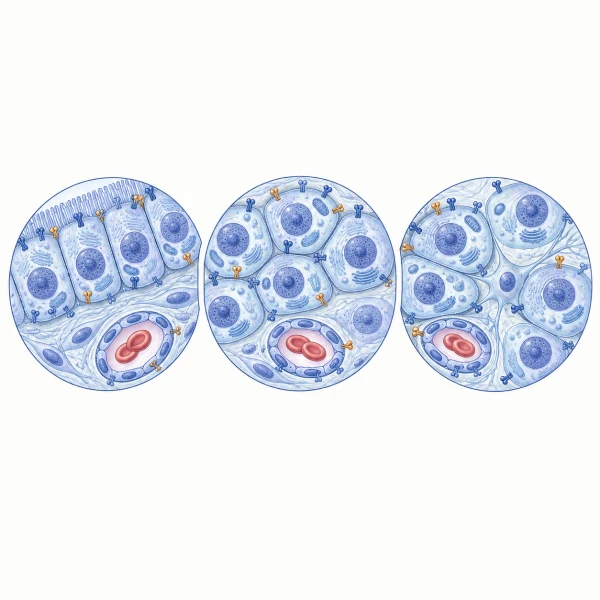
Specialized brain interfaces receive information carried in the blood. Cirsentra maps how these interfaces, including the circumventricular organs or CVOs, connect the body’s condition to coordinated responses across hundreds of systemic axes.
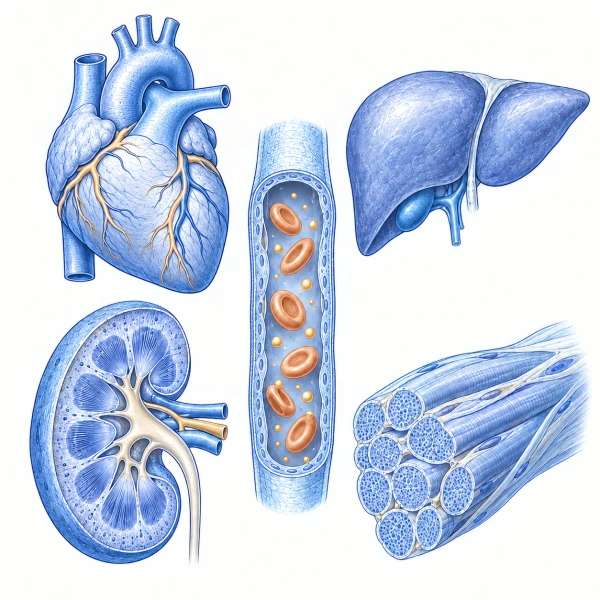
Their responsibilities span metabolism, hormones, immune defence, circulation, fluid balance, brain fluid and barriers, daily rhythms and behaviour. This architecture helps us investigate how a problem elsewhere in the body changes brain function, and where treatment could help.
The interfaces also close a loop. A disturbance in the body changes what reaches an interface, the interface changes hormonal or nervous output, and the body’s response changes what returns. Along that loop an interface can modify how a signal acts, amplify the disturbance it causes, or keep it going after the original cause has changed. We test each of these roles directly: measure what arrives, what the interface does with it, what the body does next, and what happens when the returning signal is interrupted.
That makes the interfaces places to diagnose and to treat: neutralise a harmful incoming signal, correct how the interface handles it, protect its receptors, or interrupt a reinforcing return.
Identifies the brain interfaces that connect the body’s condition to coordinated responses across organs.
In the manifesto: The body has an architecture for setting state
Discuss a partnership