07External Effectors
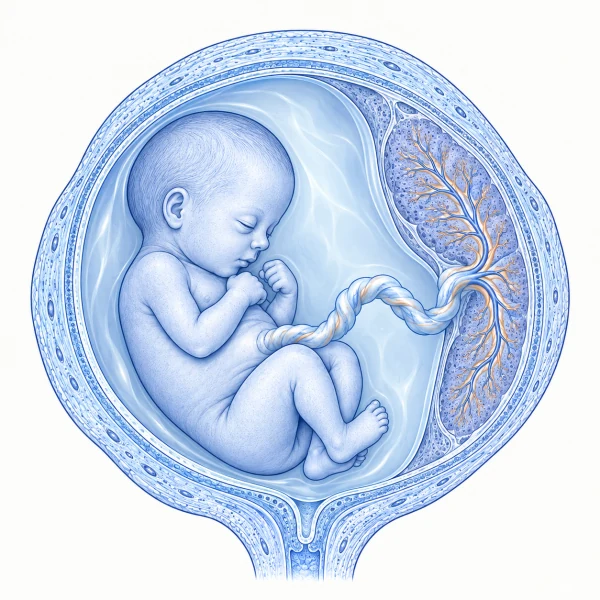
Before birth, the body builds the systems it will later use to respond to its surroundings: blood vessels, receiving cells, and systems for growth, defence and repair.
The placenta does not simply pass on what is in the mother’s blood: it selects, converts, retains and clears what reaches the growing child. Development continues after birth, as the first demands of feeding, breathing, infection and repair meet organs that are still maturing.
Construction also continues in the brain after birth. Microglia, the brain’s resident immune cells, take part in refining circuits as they form. Our analyses detect transcripts of their clock gene, BMAL1, in human microglia at every age sampled, from fetal weeks 9 to 18 into adulthood.
We propose that timing matters because of the work underway: a temporary disturbance while a circuit is being built could change what is available for later demands, even after the disturbance itself has recovered. Our experiments are designed to test this.
Our research maps this construction to investigate how early development shapes the capacity available later in life.
Explains how prenatal development constructs the capacity handed over at birth and consolidated in early life.
Discuss a partnership